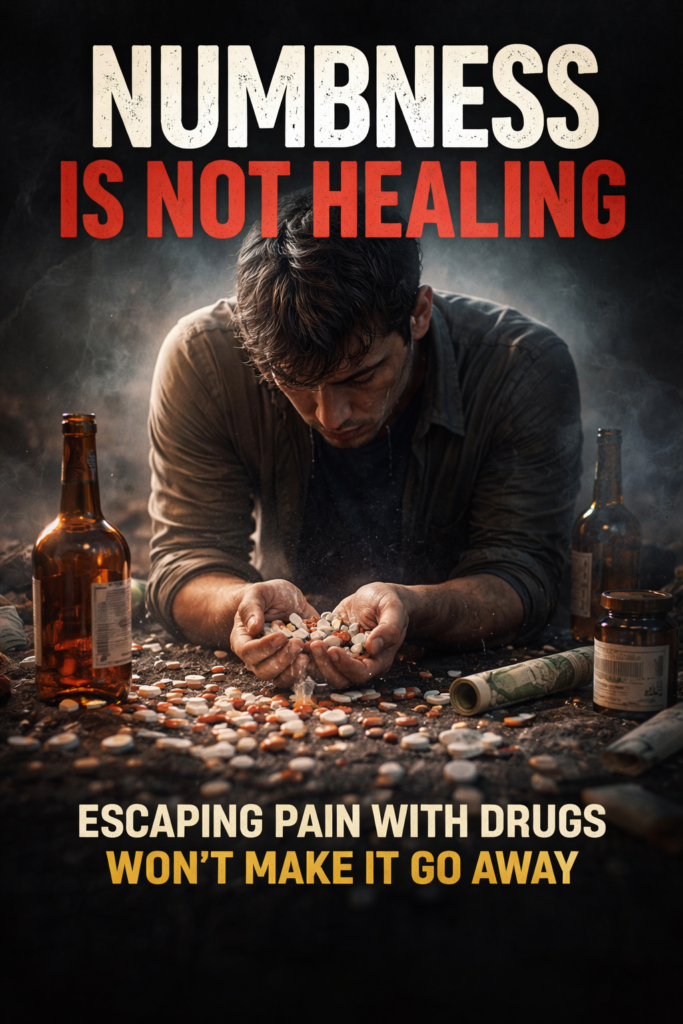
Numbness Is Not Healing: The Hidden Cost of Substance Escape
Many people who appear strong are actually numb — and for millions, that numbness comes from drugs or substance use.
They don’t react deeply. They don’t cry much. Life doesn’t seem to shake them. Society often mistakes this for toughness or control. But beneath that calm is often pain that hasn’t been healed — only silenced.
Substances can feel like relief. The anxiety fades. The sadness softens. The chaos quiets. For a moment, it feels like peace. But it isn’t healing — it’s escape.
Using drugs to suppress emotions doesn’t resolve pain; it delays it. What is buried doesn’t disappear. It waits — often returning stronger, or showing up as emptiness, disconnection, or a loss of meaning.
The Illusion of Control
In a world that rewards “keeping it together,” substances offer a quick fix: feel less, function more. But over time, the cost becomes clear:
- Emotions remain unresolved and resurface later
- Joy, passion, and connection become dull
- Dependency replaces real coping
- Growth is paused because healing requires feeling
Many end up in a quiet trap — no longer overwhelmed, but no longer fully alive.
Real Healing Requires Feeling
Substances may provide temporary relief, especially in moments of intense distress. But they are not a solution. True healing begins when you face what hurts — gradually, safely, and with support.
That means:
- Acknowledging pain instead of numbing it
- Seeking help through therapy or trusted support systems
- Understanding the root causes of your struggles
- Building healthier ways to cope and process emotions
Real strength isn’t in staying numb. It’s in choosing to feel — even when it’s uncomfortable.
If you’ve been using substances to cope, it doesn’t mean you’re weak. It means you were trying to survive. But survival is not the same as healing.
You don’t have to stay numb to stay strong.
You can choose something deeper — something real.